Your front door is one of the first places an intruder will target when attempting to break into a home. While investing in a quality deadbolt is an important first step, many homeowners overlook one critical component of their home’s security—the door frame.
Even the strongest lock can fail if the surrounding frame splinters under force. Fortunately, reinforcing your door frame is an affordable DIY project that can make forced entry significantly more difficult and improve your home’s overall security.
In this guide, we’ll explain why door frames fail, how to strengthen them, and when it’s best to call a professional locksmith.
Why Door Frame Reinforcement Matters
Most forced-entry burglaries rely on speed. Rather than picking locks, intruders often attempt to kick the door near the lock, placing tremendous pressure on the strike plate and door jamb. In many cases, the lock remains intact while the wooden frame cracks or breaks apart.
A reinforced door frame distributes that force across stronger materials and anchors the frame more securely to your home’s structure. When combined with quality locks and proper installation, door frame reinforcement creates a much stronger barrier against unauthorized entry.
Common Weak Points in a Door Frame
Before beginning your project, it’s helpful to understand where most door frames fail.
Weak Strike Plates
Many standard strike plates are secured with short screws that only penetrate the door jamb. Under heavy force, these screws can easily pull free.
Hollow Space Behind the Door Jamb
The gap between the door frame and the wall studs is often left partially empty during construction. Without proper support, the frame can flex and crack during a kick-in attempt.
Aging or Damaged Wood
Exposure to moisture, insects, and years of use can weaken wood, making it more likely to split under pressure.
Loose Hinges
Door hinges secured with short screws can loosen over time, reducing the overall strength of the entry door.
Tools and Materials You’ll Need
Before getting started, gather the following:
Tools
- Drill and drill bits
- Phillips screwdriver
- Tape measure
- Pencil
- Utility knife
- Chisel
- Hammer
- Level
Materials
- Heavy-duty security strike plate
- 3-inch hardened steel screws
- Door jamb reinforcement kit
- Door edge reinforcement plate (optional)
- Hinge reinforcement kit (optional)
- Wood filler
- Wood glue
- Wooden shims
- Paint or touch-up supplies (if needed)
Step 1: Inspect the Existing Door Frame
Begin by examining your door and frame carefully.
Look for:
- Cracked or split wood
- Loose hinges
- Gaps around the door
- Signs of previous forced entry
- Water damage or wood rot
Repair any existing damage before installing reinforcement hardware. Reinforcing a damaged frame without addressing the underlying issue can reduce the effectiveness of your upgrades.
Step 2: Upgrade the Strike Plate
The strike plate is one of the most important components of a secure door.
Remove the existing strike plate and replace it with a heavy-duty security strike plate or a reinforced box strike. Unlike standard hardware, these products spread impact across a larger section of the frame.
Use 3-inch hardened steel screws that extend through the jamb and into the wall studs. This simple upgrade dramatically increases the frame’s resistance to kick-ins.
For even greater strength, stagger the long screws slightly instead of placing them directly in line with one another.
Step 3: Reinforce the Door Jamb
The door jamb absorbs much of the force during a break-in attempt.
Install a door jamb reinforcement plate around the lock area according to the manufacturer’s instructions. These steel plates protect the wood from splitting while helping distribute impact over a larger surface.
If the jamb has minor cracks, repair them with wood filler. For more significant damage, use wood glue and clamps before installing reinforcement hardware.
Step 4: Strengthen the Hinges
Many homeowners focus only on the lock side of the door, but hinges are equally important.
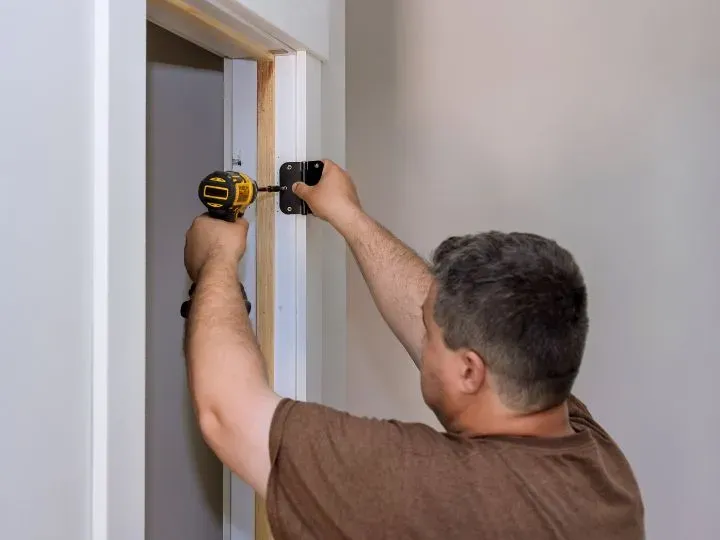
Replace one or two screws in each hinge with 3-inch screws that extend into the wall framing. This simple improvement helps prevent the door from separating from the frame during an attempted forced entry.
If your hinges show signs of wear or movement, consider installing hinge reinforcement plates for added protection.
Step 5: Install Door Edge Reinforcement
A door edge reinforcement plate wraps around the lock area, reducing the chance of the door splitting where the deadbolt and handle are installed.
Most reinforcement kits include templates that simplify installation and ensure proper alignment.
While not required for every home, this upgrade provides another layer of protection for frequently used exterior doors.
Step 6: Eliminate Gaps and Alignment Problems
A properly fitted door is naturally more secure.
Check that the gap between the door and frame is consistent and no wider than about 1/8 inch. If the door rubs, sticks, or fails to latch smoothly, make the necessary adjustments before completing your reinforcement project.
If needed, add weatherstripping to reduce excessive movement while maintaining a proper seal.
Step 7: Reinforce the Frame-to-Wall Connection
One of the strongest upgrades you can make is securing the entire door frame to the surrounding wall structure.
Carefully remove the interior trim around the frame and inspect the space between the jamb and wall studs. Fill larger gaps with wooden shims before driving 3-inch screws through the frame into the studs every 8 to 12 inches.
Once complete, reinstall the trim and touch up the finish as needed.
Common Mistakes to Avoid
While reinforcing a door frame is a relatively straightforward project, a few common mistakes can reduce its effectiveness.
Avoid using screws that are too short, as they won’t reach the structural framing behind the jamb. Don’t overlook the hinges, since they play a major role in resisting forced entry. It’s also important to repair damaged wood before installing reinforcement hardware, as weakened material can still fail under pressure.
Finally, remember that reinforcing the frame won’t compensate for a hollow-core exterior door. If your exterior door isn’t solid wood, fiberglass, or steel, replacing the door itself may provide a greater security improvement.
Additional Ways to Improve Door Security
Door frame reinforcement works best as part of a layered security strategy.
Consider adding:
- A high-quality Grade 1 or Grade 2 deadbolt
- A reinforced door security bar
- Motion-activated exterior lighting
- Smart locks with activity alerts
- Security cameras
- Reinforced glass or security film for nearby windows
Combining several security measures creates a stronger deterrent than relying on a single upgrade alone.
When to Call a Professional Locksmith
Many homeowners can reinforce a door frame themselves, but some situations are better left to a professional.
Consider hiring a locksmith if:
- The frame has significant structural damage.
- Your door no longer aligns properly.
- You’re installing high-security hardware.
- You have a steel or commercial door.
- Your insurance policy requires professional installation.
An experienced locksmith in Rockland can evaluate your existing setup, recommend the most effective upgrades, and ensure everything is installed correctly for maximum protection.
Conclusion
Reinforcing your door frame is one of the most practical and affordable ways to improve your home’s security. With the right hardware and proper installation, you can significantly reduce the risk of forced entry while extending the life of your existing door.
Whether you choose to tackle the project yourself or prefer professional assistance, strengthening your entry door is an investment in your family’s safety and peace of mind.
If you’d like expert help securing your home, Driscoll’s Lock & Key provides professional door reinforcement, lock installation, and residential locksmith services throughout Rockland County and Orange County, NY. Contact our team today to schedule a home security assessment and find the right solutions for your property.
Frequently Asked Questions
Does reinforcing a door frame really help prevent break-ins?
Yes. Reinforcing the strike plate, hinges, and door jamb makes it much harder for a door to fail during a forced-entry attempt. While no security measure is completely foolproof, a reinforced frame significantly improves resistance to kick-ins.
What screws should I use to reinforce my door frame?
Use hardened steel screws that are at least 3 inches long. These screws reach the wall studs behind the frame, creating a much stronger connection than the short screws typically included with standard hardware.
Can I reinforce my existing door frame without replacing the door?
In many cases, yes. If the frame and door are in good condition, installing a heavy-duty strike plate, reinforcement plates, and longer screws can noticeably improve security without replacing the entire entry system.
How much does it cost to reinforce a door frame?
DIY door frame reinforcement typically costs between $75 and $200, depending on the hardware you choose. Professional installation may cost more, but ensures everything is installed correctly.
Should I reinforce both the hinges and the strike plate?
Absolutely. Reinforcing both sides of the door provides more balanced protection and helps prevent the door from separating from the frame during a forced-entry attempt.