
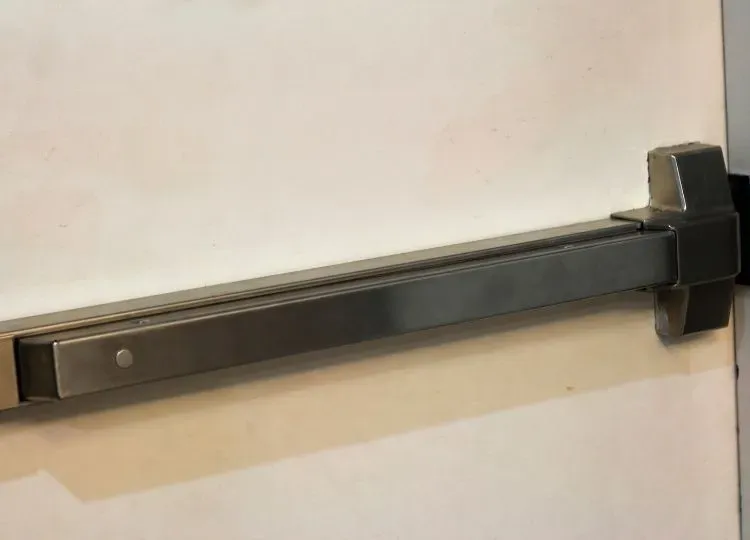
A panic bar is a critical safety feature in many commercial buildings. It allows occupants to quickly exit a building during an emergency by simply pushing a horizontal bar instead of turning a handle or using a key.
But when it comes to modern storefronts and office spaces, one question comes up often: can you install a panic bar on a glass door? Not all glass doors are built the same, and the type of glass system you have plays a major role in whether a panic bar can be installed safely and legally.
Understanding Panic Bars and Glass Doors
Panic bars are designed for fast, single-motion egress. When pushed, they release the locking mechanism and allow the door to open immediately. They are commonly required in commercial buildings such as retail stores, restaurants, schools, and office spaces.
Glass doors, however, vary widely in design. The most common types include aluminum-framed glass storefront doors, full tempered glass doors, and frameless glass systems used in modern architecture.
The key difference is structure. Panic bars do not attach directly to the glass itself. Instead, they are mounted onto a supporting frame or stile that can handle the stress of repeated use. Since glass cannot be drilled or modified after manufacturing, the installation method must be planned carefully from the start.
Can You Install a Panic Bar on a Glass Door?
Yes, you can install a panic bar on certain glass doors, but not all of them.
In most commercial applications, glass doors with aluminum framing are the best candidates. These frames provide the structural support needed to hold exit device hardware securely. The panic bar is mounted to the metal frame rather than the glass, making it both safe and code-compliant.
Frameless glass doors are more complicated. In these cases, specialized hardware systems are required, often involving clamps, mounting channels, or reinforced rails designed specifically for glass applications.
To be compliant with safety regulations, the installation must also meet local building codes and ADA (Americans with Disabilities Act) requirements, which dictate how easily a door must open during an emergency.
Types of Panic Bars Used on Glass Doors
Several types of panic bars and exit devices can be used, depending on the door configuration:
Rim Exit Devices
These are the most common types used on glass storefront doors with aluminum framing. The device is mounted on the surface of the door and latches into the frame. Rim devices are reliable, widely accepted by building codes, and suitable for most commercial entry doors.
Vertical Rod Exit Devices
These systems lock the door at both the top and bottom, providing extra security and stability. They are often used in higher-traffic or higher-security environments. While more visible and slightly more complex, they are very effective for reinforced glass door systems with proper framing.
Frameless Glass Exit Systems
These are specialized solutions designed specifically for modern frameless glass doors. Instead of traditional mounting, they use engineered clamps or bonded hardware systems that distribute force without damaging the glass. These systems are highly customized and must be installed with precision.
Building Code Compliance Requirements
Panic bars are not just a convenience feature. They are often required by law in commercial buildings.
Local building codes typically require panic hardware in areas with high occupancy loads, such as assembly halls, retail stores, and public buildings. The goal is to ensure a fast and unobstructed exit during emergencies.
Most codes require:
- Single-motion egress (one push to exit)
- No special knowledge or tools required
- Hardware that is UL-listed and tested for safety standards
However, requirements can vary depending on your local Authority Having Jurisdiction (AHJ), so compliance should always be verified before installation.
When You Should NOT Install a Panic Bar on a Glass Door
There are situations where installing a panic bar is not recommended or even possible:
- Frameless glass doors without engineered mounting systems
- Doors made from tempered glass not designed for hardware installation
- Lightweight residential-style glass doors used in commercial spaces
- Doors without adequate structural framing or reinforcement
In these cases, attempting installation can lead to safety hazards, glass failure, or building code violations.
Why Professional Installation Matters
Installing panic hardware on glass doors is not a standard DIY project. The margin for error is extremely small, and the consequences of incorrect installation can be serious.
Improper mounting can cause:
- Glass breakage under pressure
- Door misalignment and operational failure
- Failed safety inspections
- Increased liability risks for property owners
A professional locksmith ensures the correct hardware is selected, properly installed, and fully compliant with safety codes. They also understand how to work with different glass systems without compromising structural integrity.
Conclusion
So, can you install a panic bar on a glass door? Yes, but only when the door system is designed to support it and the correct hardware is used. Aluminum-framed glass doors are typically the easiest and most reliable option, while frameless systems require specialized solutions and expert installation.
Because of the safety and compliance factors involved, this is one area where professional expertise makes a major difference.
For safe, code-compliant installation and expert guidance on commercial door hardware, Driscoll’s Lock & Key, a locksmith in Orange County, is ready to help ensure your property is secure and properly equipped for emergency egress.
Frequently Asked Questions
Can you put a panic bar on any door?
No. A panic bar must be installed on a door with proper structural support and compatible framing. It works on most metal and aluminum-framed doors, but not on lightweight doors or frameless glass without reinforcement.
Which doors need a panic bar?
Panic bars are required on exit doors in commercial or public buildings with higher occupancy, such as retail stores, restaurants, schools, theaters, and offices.
What is the purpose of a panic bar on a door?
A panic bar allows fast exit during emergencies by letting people open a door with one push, without keys or special actions.