Deadbolt locks are one of the most common security features found on residential and commercial doors, often chosen for their strength and reliability. But a question many homeowners ask at some point is: can a deadbolt actually be picked?
The short answer is yes. Some deadbolts can be picked under certain conditions. However, the reality is far more nuanced. The difficulty depends heavily on the quality of the lock, its internal design, and the tools or skill level involved.
What Is a Deadbolt Lock?
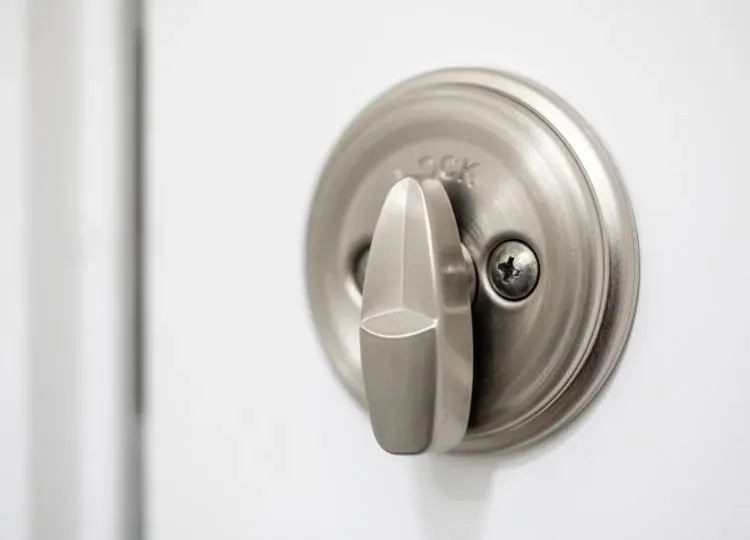
A deadbolt lock is a type of locking mechanism that provides enhanced security by using a solid metal bolt that extends deep into the door frame when locked. Unlike spring-latch locks, which rely on a spring mechanism to stay in place, a deadbolt does not retract without manual or keyed action.
This makes deadbolts significantly more resistant to forced entry techniques such as “credit carding” or simple latch manipulation.
Most residential deadbolts use a pin tumbler cylinder, which is the same basic system found in many standard key-operated locks. The key advantage of a deadbolt is not necessarily the cylinder itself, but the strength of the bolt and how securely it anchors the door to the frame.
How a Deadbolt Lock Works Internally
To understand whether a deadbolt can be picked, it helps to understand what is happening inside the lock.
Inside most standard deadbolts is a pin tumbler system, which includes several key components:
- Key pins: The bottom pins that interact directly with the key cuts
- Driver pins: The upper pins that sit above the key pins
- Springs: These push the pins downward into the cylinder
When no key is inserted, the driver pins block the rotation of the cylinder by sitting partly across the shear line, or the inner cylinder meets the outer housing.
When the correct key is inserted, its ridges lift each pin stack to precisely the correct height so that all gaps align along the shear line. Once aligned, the cylinder can rotate freely, allowing the bolt to retract or extend.
Lock picking attempts work by trying to replicate this alignment without the original key. However, modern deadbolts may include additional internal features that make this process significantly more difficult.
Can You Pick a Deadbolt Lock?
Yes, a deadbolt lock can be picked in theory, but not all deadbolts are equally vulnerable, and many cannot be easily picked in practice.
Basic or inexpensive deadbolts with standard pin tumbler designs tend to offer less resistance. These locks typically use standard pins and simpler internal structures, which makes them more susceptible to manipulation.
It’s also important to understand that lock picking is not a quick or guaranteed method of entry. Even in ideal conditions, it requires skill, time, and the right tools. In real-world situations, especially with higher-grade locks, successful picking becomes significantly more challenging.
Why Some Deadbolts Are Harder to Pick Than Others
Not all deadbolts are built the same, and the differences in quality play a major role in security.
One of the biggest factors is manufacturing precision. High-quality locks are engineered with tighter tolerances, meaning there is less room for error or “wiggle room” inside the cylinder. This makes it harder for unauthorized manipulation to succeed.
Security ratings also matter. Locks that meet higher standards, such as ANSI/BHMA Grade 1, are generally tested for durability, strength, and resistance to tampering.
Many high-security deadbolts also include anti-picking features such as:
- Spool pins, which create false feedback when manipulated
- Serrated pins, which make alignment more complex
- Restricted keyways, which limit tool access inside the cylinder
Even the keyway design can impact how easily a lock can be manipulated.
In addition, installation quality plays a crucial role. Even the strongest deadbolt can be compromised if the door frame, strike plate, or screws are weak.
Other Ways Deadbolts Can Be Bypassed
While lock picking is often discussed, it is only one of several theoretical methods of bypassing a lock and not always the most common in real-world situations.
In practice, many security breaches involve physical force rather than manipulation of the internal mechanism. Weak door frames, poor installation, or low-quality hardware can make a door vulnerable even if the lock itself is strong.
Some entry attempts may also involve damaging the lock cylinder or surrounding hardware. However, these methods are typically noisy, time-consuming, and destructive, which is why they are not commonly used in situations where discretion is important.
This is why focusing only on the lock mechanism is not enough. True home security depends on the entire door system working together as a reinforced barrier.
How to Improve Your Home Security
If you are concerned about lock security, upgrading your deadbolt is one of the most effective improvements you can make.
Start by choosing a high-security deadbolt, ideally one rated Grade 1 for residential use. These locks are built to withstand both physical force and manipulation attempts.
Next, pay attention to installation. A strong lock is only as good as the door it is installed in. Reinforcing the strike plate with longer screws that anchor into the wall framing can significantly increase resistance to forced entry.
You may also consider additional layers of security, such as:
- Reinforced door frames
- Security strike plates
- Smart locks with activity monitoring
- Exterior lighting to deter unwanted activity
- Security cameras for visibility and deterrence
The goal is to create multiple barriers rather than relying on a single point of protection.
When to Call a Rockland Locksmith
There are several situations where contacting a professional locksmith is the safest and most efficient option.
If you are locked out of your home, experiencing a broken or jammed lock, or dealing with damage after a break-in attempt, a trained locksmith can restore access and assess the condition of your hardware.
A locksmith in Rockland can also help you determine whether your current deadbolt meets modern security standards and recommend upgrades tailored to your specific door setup and risk level.
Professional evaluation is especially useful if you are unsure whether your existing locks provide adequate protection. For reliable assistance, homeowners can contact Driscoll’s Lock & Key for expert locksmith services, including lock installation, repair, and security upgrades.
Conclusion
So, can you pick a deadbolt lock? The answer is yes in some cases, but it depends heavily on the type and quality of the lock, as well as the skill involved. While basic deadbolts may be more vulnerable, modern high-security options are designed specifically to resist such manipulation.
Ultimately, the strength of your home security comes from more than just the lock itself. Proper installation, reinforced hardware, and layered protection all work together to create a safer and more secure environment.
If you’re considering upgrading your locks or want a professional assessment of your current setup, Driscoll’s Lock & Key can help ensure your home stays properly protected.
Frequently Asked Questions
How to unlock a deadbolt lock without a key?
You generally can’t unlock a deadbolt without the correct key. If you’re locked out, a professional locksmith is the safest option.
Can I open a deadbolt from the outside?
Yes, if it’s a standard single-cylinder deadbolt. Double-cylinder deadbolts require a key from both sides.
Can a deadbolt lock be broken into?
Yes, but it depends on the lock quality and installation. High-grade deadbolts are much more resistant to forced entry.
Can a magnet unlock a deadbolt?
No. Standard deadbolts are mechanical and are not affected by magnets.