
When selecting locks for your home or business, understanding lock grades can make the difference between adequate security and professional-level protection. The American National Standards Institute (ANSI) has established a comprehensive grading system that helps consumers and professionals evaluate lock quality, durability, and security performance.
Understanding ANSI Lock Standards
The ANSI/ALOA (Associated Locksmiths of America) grading system categorizes locks into three distinct grades, with Grade 1 representing the highest level of security and durability, and Grade 3 providing basic residential protection. These standards were developed to create uniformity in the lock industry and help consumers make informed decisions about their security needs.
Each grade is determined through rigorous testing that evaluates factors including operational cycles, strike testing, door preparation requirements, and resistance to forced entry attempts. The testing protocols simulate years of real-world use and various attack methods to ensure locks meet their designated performance criteria.
Grade 1: Commercial and High-Security Applications
Grade 1 locks represent the pinnacle of mechanical lock security and are designed for heavy-duty commercial applications. These locks must withstand 800,000 operational cycles during testing, demonstrating exceptional durability under constant use. The strike test requires Grade 1 locks to resist 10 strikes with a 75-pound force, simulating attempts to force the lock through impact.
Key characteristics of Grade 1 locks include reinforced internal mechanisms, hardened steel components, and precision manufacturing that ensures consistent performance over extended periods. The latch bolt must project at least one inch from the door edge, and the lock must resist torque attacks up to 360 inch-pounds in both directions.
These locks are typically specified for office buildings, retail establishments, government facilities, and high-traffic commercial spaces where security and reliability are paramount. While Grade 1 locks represent a significant investment, their superior construction and security features make them cost-effective for applications requiring maximum protection.
Grade 2: Mid-Level Security for Residential and Light Commercial Use
Grade 2 locks strike a balance between security and affordability, making them popular for residential applications and light commercial use. These locks must complete 400,000 operational cycles and withstand 5 strikes at 75 pounds of force during testing. The latch bolt projection requirement is reduced to 5/8 inch, and torque resistance is set at 180 inch-pounds.
The construction quality of Grade 2 locks typically features brass or steel components with adequate precision for reliable operation. While not as robust as Grade 1 locks, they provide substantial security improvement over basic hardware and are suitable for most residential applications where high traffic is not a concern.
Many homeowners find Grade 2 locks offer the optimal combination of security, durability, and value. They provide meaningful protection against common break-in attempts while remaining accessible to average consumers. Professional locksmiths often recommend Grade 2 locks for residential customers seeking to upgrade from builder-grade hardware.
Grade 3: Basic Residential Security
Grade 3 locks meet minimum security requirements and are commonly found in new construction and budget-conscious applications. Testing requirements include 200,000 operational cycles and resistance to 2 strikes at 75 pounds of force. The latch bolt must project at least 1/2 inch, with torque resistance of 90 inch-pounds.
While Grade 3 locks provide basic security, they typically feature simpler internal mechanisms and may use materials like zinc alloy or plastic components to reduce manufacturing costs. These locks are suitable for interior doors, secondary entrances, or situations where minimal security is acceptable.
Understanding the limitations of Grade 3 locks is important for property owners making security decisions. While they meet basic standards, they may not provide adequate protection for primary entrances or valuable property storage areas. Many security professionals recommend upgrading to higher grades for main entry points.
Residential vs. Commercial Applications
The choice between lock grades often depends on the specific application and security requirements. Residential properties typically benefit from Grade 2 locks on main entrances, with Grade 1 locks reserved for particularly high-value homes or security-conscious owners. Grade 3 locks may be appropriate for interior doors or secondary access points.
Commercial applications generally require Grade 1 locks for exterior doors, employee entrances, and areas containing valuable assets. The higher operational cycle rating ensures these locks will perform reliably despite heavy daily use. Some commercial applications may use Grade 2 locks for interior offices or low-traffic areas to balance security needs with budget constraints.
When consulting with security professionals, many property owners discover that mixing lock grades throughout their facility can provide cost-effective security. This approach places the highest-grade locks where they’re most needed while using appropriate lower grades for less critical applications.
Testing and Certification Process
ANSI lock testing involves comprehensive evaluation of mechanical performance, security features, and durability characteristics. Independent testing laboratories conduct these evaluations using standardized protocols that simulate real-world conditions and attack methods.
The operational cycle testing involves repeatedly operating the lock mechanism using automated equipment that precisely controls timing and force application. This testing reveals potential failure points and ensures the lock will perform reliably throughout its expected service life.
Strike testing uses a standardized apparatus to deliver controlled impacts to the lock, simulating kick-in attempts and other forced entry methods. The number of strikes and force levels vary by grade, with higher grades required to resist more severe attacks.
Torque testing applies rotational force to lock cylinders and handles to evaluate resistance to twisting attacks. This testing is particularly important for commercial applications where attackers might use tools to apply substantial leverage to lock components.
Beyond ANSI: Additional Security Considerations
While ANSI grades provide valuable guidance for lock selection, additional security factors deserve consideration. Pick resistance, bump key protection, and drill resistance are important security features that may vary within grade categories. High-security cylinders with specialized keyways and advanced pin systems can provide enhanced protection regardless of the lock’s ANSI grade.
Electronic and smart lock technologies introduce additional complexity to security evaluation. These systems may incorporate traditional mechanical locks with ANSI grades while adding electronic access control, audit trails, and remote management capabilities. The integration of mechanical and electronic security requires careful evaluation of both components.
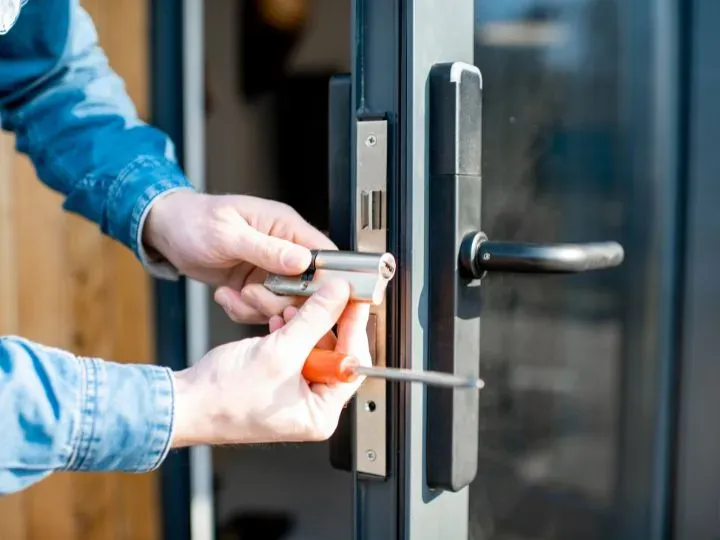
Lock installation quality significantly impacts security regardless of ANSI grade. Proper door preparation, appropriate strike plate installation, and correct adjustment of lock components are essential for achieving rated performance. Poor installation can compromise even the highest-grade locks, while professional installation maximizes the security potential of any lock grade.
Professional Installation and Maintenance
Working with qualified locksmiths ensures proper lock selection and installation for specific applications. Experienced professionals like those at Driscoll’s Lock & Key in Rockland, NY, understand how ANSI grades translate to real-world security needs and can recommend appropriate hardware for different situations. Professional locksmiths also ensure proper installation techniques that maximize lock performance and longevity.
Regular maintenance preserves lock performance and security throughout the service life. This includes lubrication of moving parts, adjustment of strike alignment, and periodic evaluation of wear patterns. Professional maintenance can identify potential problems before they compromise security and extend the operational life of quality locks.
Understanding ANSI lock grades empowers property owners to make informed security decisions based on their specific needs and risk factors. While higher grades generally provide better security, the optimal choice depends on balancing security requirements, budget constraints, and application-specific factors. Professional consultation can help identify the most appropriate lock grades for any security application.
The investment in properly graded locks pays dividends through enhanced security, reduced maintenance requirements, and peace of mind. Whether protecting a family home or a commercial facility, understanding ANSI standards provides the foundation for making intelligent security hardware decisions that will provide reliable protection for years to come.