
The commercial security landscape has undergone a dramatic transformation in recent years, with traditional lock-and-key systems increasingly giving way to sophisticated keyless entry solutions. As businesses seek to enhance security while improving operational efficiency, two primary technologies have emerged as frontrunners: biometric systems and PIN-based access control. Understanding the nuances, advantages, and limitations of each approach is crucial for organizations looking to make informed decisions about their security infrastructure.
The Evolution of Commercial Access Control
Traditional mechanical locks, while reliable, present inherent security challenges in commercial environments. Lost keys, unauthorized duplication, and the logistical complexity of managing large key sets have pushed businesses toward electronic alternatives. Keyless entry systems address these fundamental issues while offering enhanced features like access logging, time-based restrictions, and remote management capabilities.
The transition to keyless systems represents more than just a technological upgrade—it reflects a broader shift toward integrated security ecosystems that can adapt to modern business needs. Companies across industries, from small retail operations to large corporate campuses, are recognizing the strategic value of access control systems that offer both security and operational intelligence.
Biometric Access Control Systems
Biometric technology leverages unique physiological characteristics to grant access, making it virtually impossible to share, lose, or duplicate credentials. The most common biometric modalities in commercial applications include fingerprint recognition, iris scanning, facial recognition, and hand geometry systems.
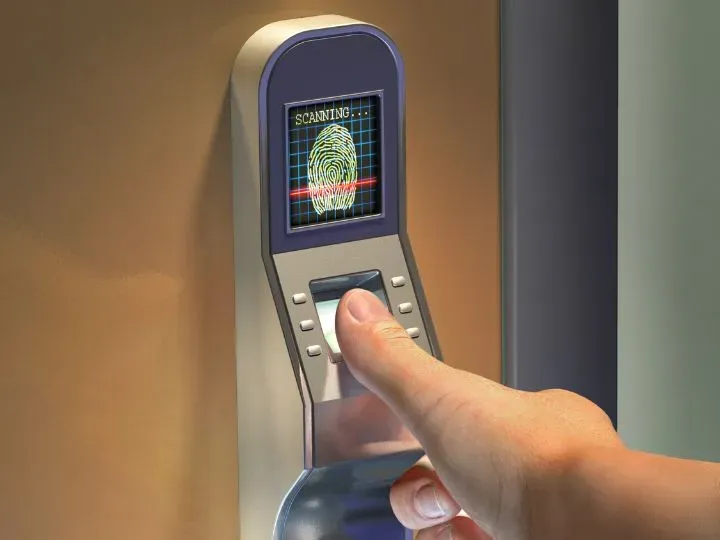
Fingerprint Recognition Systems remain the most widely deployed biometric solution due to their balance of accuracy, cost, and user acceptance. Modern capacitive and optical sensors can process authentication requests in under a second while maintaining false acceptance rates below 0.001%. These systems typically store encrypted biometric templates rather than actual fingerprint images, addressing privacy concerns while enabling rapid matching algorithms.
Facial Recognition Technology has advanced significantly with the integration of artificial intelligence and machine learning. Contemporary systems can accurately identify individuals even with changes in lighting conditions, facial hair, or eyewear. The contactless nature of facial recognition became particularly valuable during the COVID-19 pandemic, when organizations sought to minimize surface contact while maintaining security protocols.
Iris and Retinal Scanning offer the highest levels of biometric accuracy but remain primarily in high-security applications due to cost considerations and user acceptance factors. These systems excel in environments where absolute identity verification is paramount, such as data centers or research facilities.
The primary advantages of biometric systems include their inherent security—credentials cannot be shared, stolen, or forgotten—and their audit capabilities, which create detailed access logs tied to specific individuals. However, these systems face challenges related to environmental factors, such as dust or moisture affecting sensors, and the need for fallback authentication methods when biometric readers malfunction.
PIN-Based Access Control Systems
PIN-based systems require users to input a numerical code to gain access, representing a middle ground between traditional keys and more advanced biometric solutions. These systems range from simple standalone keypads to sophisticated networked solutions integrated with broader security management platforms.
Standalone PIN Systems offer a cost-effective entry point for businesses seeking basic keyless functionality. These units typically store multiple user codes locally and can operate independently of network infrastructure. While limited in their reporting capabilities, they provide immediate security benefits and can be deployed quickly across multiple entry points.
Networked PIN Solutions integrate with centralized management systems, enabling real-time monitoring, remote code changes, and comprehensive audit trails. These systems can support hundreds or thousands of unique user codes while providing administrators with granular control over access permissions and time-based restrictions.
The strength of PIN-based systems lies in their simplicity and reliability. Users require no special training, and the technology is largely immune to environmental factors that might affect biometric sensors. Additionally, PIN systems typically offer multiple backup options, including master codes and physical key overrides, ensuring continued access even during system maintenance or failures.
However, PIN-based systems are vulnerable to several security risks. Codes can be shared among unauthorized users, observed during entry, or compromised through various social engineering tactics. The human tendency to choose predictable numerical sequences also creates potential vulnerabilities that malicious actors might exploit.
Comparative Analysis: Security Considerations
When evaluating security effectiveness, biometric systems generally provide superior protection against unauthorized access. The unique nature of biometric characteristics makes credential sharing practically impossible, while advanced liveness detection features in modern systems prevent spoofing attempts using photographs or recordings.
PIN-based systems, while more vulnerable to credential sharing, can achieve strong security when properly implemented with appropriate policies. Regular code changes, complexity requirements, and user education programs can significantly mitigate common vulnerabilities. Additionally, PIN systems often include anti-tailgating features and duress codes that can alert security personnel to coercive situations.
Both system types benefit from integration with broader security ecosystems, including surveillance cameras, intrusion detection systems, and visitor management platforms. This integration enables comprehensive incident response and provides valuable context for security events.
Operational Considerations and User Experience
The user experience differs significantly between biometric and PIN-based systems, with implications for adoption rates and ongoing operational efficiency. Biometric systems typically offer faster authentication times once users are enrolled, with most systems processing identification requests in under two seconds. However, initial enrollment requires more time and technical support, particularly in organizations with large employee populations.
PIN-based systems require minimal setup time and can accommodate immediate access for new users. However, daily operation may be slower, particularly in high-traffic areas where multiple users must input codes sequentially. The cognitive load of remembering numerical codes also creates potential friction points, especially for employees who access multiple secured areas with different PIN requirements.
Maintenance considerations favor PIN-based systems, which typically require only periodic battery replacement and basic cleaning. Biometric systems need more sophisticated maintenance protocols, including sensor calibration, template database management, and environmental monitoring to ensure consistent performance.
Cost Analysis and Implementation Factors
Initial hardware costs vary significantly between system types, with basic PIN keypads starting at under $200 per unit, while biometric readers typically begin around $500 and can exceed $2,000 for advanced multi-modal systems. However, these upfront costs represent only one component of the total ownership equation.
Installation complexity affects overall project costs, with biometric systems often requiring more extensive network infrastructure and integration work. PIN-based systems can frequently utilize existing wiring and may require minimal configuration, reducing implementation time and associated labor costs.
Long-term operational costs include software licensing, maintenance contracts, and user management overhead. Biometric systems may generate higher ongoing costs due to their technical complexity, while PIN-based systems typically have lower maintenance requirements but may incur higher administrative costs due to regular code management activities.
Organizations must also consider scalability factors when evaluating long-term costs. Biometric systems generally scale more efficiently for large user populations, as template storage and management become more cost-effective at scale. PIN-based systems may face practical limitations in large environments due to code management complexity and potential security compromises.
Industry Applications and Use Cases
Different commercial environments present unique requirements that may favor one technology over another. Healthcare facilities, for example, often prefer biometric systems due to their infection control benefits and the critical nature of access control in medical environments. The ability to authenticate without touching shared surfaces aligns with hygiene protocols while ensuring that only authorized personnel can access sensitive areas.
Financial institutions frequently deploy hybrid approaches, using biometric authentication for high-security areas like server rooms or cash handling facilities, while implementing PIN-based systems for general office access. This tiered approach allows organizations to match security levels with risk profiles while managing costs effectively.
Manufacturing environments may favor PIN-based systems due to their tolerance for industrial conditions and the practical challenges of biometric authentication when workers wear protective equipment. However, some facilities have successfully implemented facial recognition systems that can operate effectively even when personnel wear safety glasses or face coverings.
Educational institutions often choose PIN-based systems for their simplicity and the ease of managing access for temporary users like substitute teachers or visiting researchers. The ability to quickly issue and revoke access codes aligns well with the dynamic nature of academic environments.
Future Trends and Technological Developments
The access control industry continues to evolve rapidly, with several emerging trends likely to influence future commercial deployments. Mobile-based authentication systems are gaining traction, allowing users to authenticate using smartphones through Bluetooth Low Energy or Near Field Communication protocols. These systems combine the convenience of device-based authentication with the security benefits of encrypted communication.
Artificial intelligence integration is enhancing both biometric and PIN-based systems. AI algorithms improve biometric matching accuracy while reducing false positive rates, while machine learning systems can detect suspicious patterns in PIN usage that might indicate security breaches or policy violations.
Cloud-based management platforms are becoming standard, enabling organizations to manage multiple sites from centralized dashboards while benefiting from automatic software updates and enhanced analytics capabilities. This trend particularly benefits multi-location businesses that need consistent security policies across diverse geographic areas.
Interoperability standards are also evolving, with organizations like the Security Industry Association developing protocols that enable different access control systems to communicate effectively. This standardization reduces vendor lock-in concerns and enables organizations to select best-of-breed solutions for different applications.
Implementation Best Practices
Successful keyless entry system deployment requires careful planning and adherence to established best practices. Organizations should begin with a comprehensive security assessment that identifies specific threats, regulatory requirements, and operational constraints. This assessment should inform the selection criteria and help prioritize features that align with organizational needs.
User training programs are critical for both system types but particularly important for biometric systems where proper enrollment and authentication techniques affect system performance. Training should address not only operational procedures but also security policies and incident response protocols.
Regular system maintenance and monitoring ensure continued effectiveness and help identify potential security issues before they become critical problems. This includes periodic access audits, hardware inspections, and software updates that address emerging security threats.
Integration planning should consider not only current requirements but also future expansion needs. Selecting systems with open architectures and standard protocols provides flexibility for future enhancements and reduces the risk of costly system replacements.
Professional Installation and Support Considerations
The complexity of modern access control systems often necessitates professional installation and ongoing support services. Local security professionals, such as established locksmiths like Driscoll’s Lock & Key in Rockland, NY, provide valuable expertise in system selection, installation, and maintenance. These professionals understand local building codes, security regulations, and can provide ongoing support that ensures system reliability.
Working with experienced installers helps organizations avoid common implementation pitfalls while ensuring that systems are properly configured for optimal performance. Professional installers can also provide valuable insights into system placement, environmental considerations, and integration with existing security infrastructure.
Conclusion
The choice between biometric and PIN-based keyless entry systems requires careful consideration of security requirements, operational needs, budget constraints, and long-term strategic objectives. Biometric systems offer superior security and user accountability but require higher initial investment and more complex maintenance protocols. PIN-based systems provide reliable, cost-effective access control with simpler management requirements but may require additional security measures to address potential vulnerabilities.
Many organizations find that hybrid approaches, utilizing both technologies in different applications based on specific risk profiles and operational requirements, provide the optimal balance of security, functionality, and cost-effectiveness. As technology continues to evolve, the distinctions between these approaches may blur, with new solutions offering the benefits of both while addressing their respective limitations.
The most important factor in any keyless entry system deployment is ensuring that the selected solution aligns with organizational needs and receives proper implementation, training, and ongoing support. By carefully evaluating options and working with qualified security professionals, businesses can deploy access control systems that enhance security while supporting operational efficiency for years to come.