A chain link fence can help define your property, control access, and create a clear boundary around a home or business. But the fence itself isn’t the only part of the security equation. If the gate can be opened easily, the entire perimeter can be compromised.
That’s why choosing the right gate lock for a chain link fence matters. The best lock depends on how often the gate is used, who needs access, the level of security required, and how much exposure the hardware will have to weather.
From heavy-duty padlocks to keyed gate locks and electronic access systems, there are several options worth considering.
Why Your Chain Link Gate Lock Matters
A chain link fence can be difficult to get through without cutting or climbing it. The gate, however, is designed to open and close regularly, which means it needs hardware that balances security with convenience.
A weak or worn gate latch can create an unnecessary vulnerability. Rust, loose hardware, misalignment, and damaged hinges can also make it difficult for the lock to engage properly.
The right gate lock should do more than simply keep the gate closed. It should be compatible with the gate, withstand outdoor conditions, and provide an appropriate level of resistance against unauthorized access.
Types of Gate Locks for Chain Link Fences
There isn’t one universal lock that works for every chain link gate. Here are some of the most common options.
1. Padlocks
Padlocks are a straightforward choice for many chain link gates. They can be used with a compatible hasp, latch, or other gate hardware and are available in different sizes and security levels.
For basic residential applications, a quality outdoor-rated padlock may provide sufficient security. Commercial properties or locations with greater security concerns may benefit from heavy-duty models with hardened components and additional resistance to tampering.
One advantage of padlocks is flexibility. They can often be replaced without changing the entire gate locking mechanism.
2. Keyed Gate Locks
A keyed gate lock provides dedicated locking hardware that can be integrated into the gate rather than relying solely on a removable padlock.
These locks can be especially convenient when a gate is used frequently. Instead of removing and reinstalling a padlock every time someone enters, an authorized user can simply use a key.
Depending on the gate design, keyed locks may be installed with different types of latches or cylinders. Compatibility is important, particularly when replacing an existing lock.
3. Combination Locks
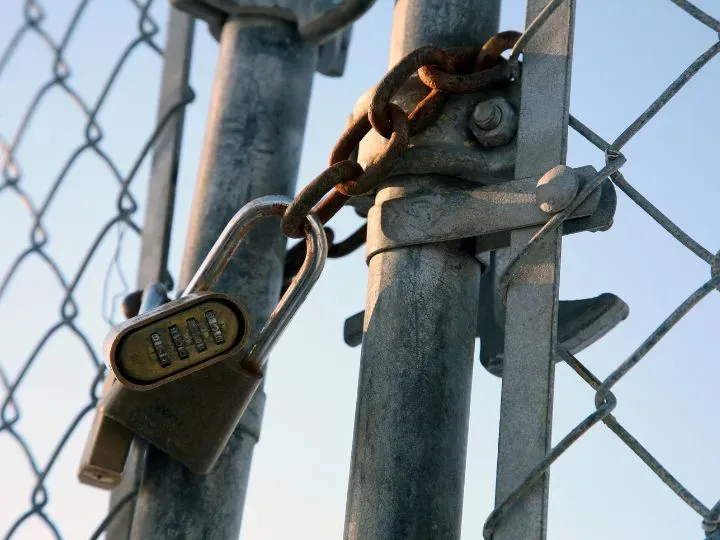
Combination locks offer keyless access, which can be useful when several people regularly need to enter through the same gate.
Instead of carrying a key, authorized users enter a preset combination. This can be convenient for rental properties, storage areas, shared spaces, or businesses where access needs to be provided to multiple people.
One consideration is code management. If too many people know the combination or a former user still has access to it, the code may need to be changed.
4. Magnetic Locks
Magnetic locks, sometimes called maglocks, use an electromagnetic force to keep a gate secured. They’re commonly used as part of an electronic access control system.
Depending on the setup, users may gain access through a keypad, card reader, remote control, or other authorized entry method.
These systems can be useful for commercial properties and other locations where property owners need more control over who can enter and when. However, installation is more involved than installing a basic padlock and may require appropriate electrical and access-control equipment.
5. Keypad and Electronic Gate Locks
For properties that need controlled access without distributing physical keys, keypad locks and other electronic gate locks can be an option.
Users can enter a code or use an authorized credential to unlock the gate. Some systems can also be integrated with broader access-control solutions.
Electronic locks can provide convenience, but they require more planning than traditional hardware. Power requirements, weather exposure, gate construction, and backup access should all be considered before installation.
How to Choose the Right Chain Link Gate Lock
The right lock depends on how your gate is actually used. Before buying one, consider these factors.
Security Requirements
Start by determining what you’re trying to protect and how much security the property requires.
A backyard gate may only need a reliable outdoor padlock or keyed lock. A commercial property, construction site, storage facility, or restricted area may require heavier-duty hardware or an electronic access-control system.
Frequency of Use
How often does the gate open?
If it’s used once or twice a day, a traditional keyed lock or padlock may be perfectly practical. If employees, contractors, residents, or customers are using the gate throughout the day, a keypad or other convenient access system may make more sense.
Number of Authorized Users
A gate used by one homeowner has different requirements than a gate shared by an entire business.
If several people need access, consider how keys or access codes will be managed. A system that allows access to be changed without replacing the entire lock can be useful when users change over time.
Outdoor Exposure
Chain link gates are exposed to rain, humidity, dirt, sunlight, and temperature changes. Your lock needs to be designed for those conditions.
Look for weather-resistant construction and materials that are less susceptible to corrosion. Even a quality lock can develop problems if it’s neglected for years in a harsh outdoor environment.
Gate and Hardware Compatibility
Don’t assume every gate lock will fit every chain link gate.
The gate’s frame, latch, hinge configuration, thickness, and existing hardware can all affect which locking mechanisms will work. A lock may be excellent on paper but ineffective if it doesn’t properly engage the gate.
Don’t Overlook the Gate Hardware
A new lock won’t solve every security problem if the rest of the gate is in poor condition.
Check whether the gate closes completely and lines up correctly with the fence post. Loose hinges, bent frames, damaged latches, or excessive movement can prevent a lock from engaging as intended.
If the gate has shifted over time, it may need adjustment before new locking hardware is installed.
It’s also worth checking the lock periodically for rust, wear, or other signs of damage. Outdoor hardware tends to take a beating, and catching a problem early is easier than dealing with a gate that suddenly won’t lock.
When to Have a Locksmith Install Your Gate Lock
Some basic gate locks can be installed by a property owner with the right tools. More complicated installations can be a different story.
A professional locksmith can evaluate the gate and existing hardware before recommending a locking solution. This is particularly helpful when you’re replacing an older lock, installing a keyed mechanism, or adding electronic access control.
Professional installation can also help ensure that the lock and latch align correctly. Even a high-quality lock won’t perform properly if the gate doesn’t close or engage correctly.
If you’re not sure which chain link fence gate lock is appropriate for your property, having the hardware evaluated before purchasing a replacement can save you time and prevent compatibility problems.
Keep Your Chain Link Gate Secure
A chain link fence provides a useful perimeter, but the gate is where authorized access happens, and where weak hardware can undermine the security of the entire fence.
The right solution could be as simple as a heavy-duty padlock or keyed gate lock. For properties with multiple users or more demanding access requirements, a combination, keypad, magnetic, or electronic locking system may be a better fit.
The important thing is to choose hardware that matches the gate, the environment, and the way the property is used.
If your chain link gate lock is worn out, difficult to operate, or no longer providing the security you need, schedule a gate lock service with Driscoll’s Lock & Key. A professional locksmith in Rockland can evaluate your existing hardware, recommend compatible options, and install the right locking solution for your property.
Frequently Asked Questions
What is the best lock for a chain link fence gate?
The best lock depends on how the gate is used and the level of security needed. Heavy-duty padlocks, keyed gate locks, and electronic access systems are all options for different situations.
Can you put a keyed lock on a chain link fence gate?
Yes. Many chain link gates can accommodate keyed locking hardware. The specific lock will depend on the gate frame, latch, and existing hardware.
Are padlocks secure enough for a chain link gate?
A high-quality, weather-resistant padlock can provide good security for many residential gates. Higher-security properties may benefit from a heavy-duty lock or a more advanced access-control system.
How do I keep my chain link gate from being opened?
A properly installed gate lock or latch can prevent unauthorized access. For additional security, make sure the hinges, gate frame, latch, and fence posts are also in good condition.
Can a locksmith install a lock on a chain link fence gate?
Yes. A locksmith can assess the existing gate hardware, recommend compatible locking options, and install or replace the lock.
What type of gate lock is best for outdoor use?
Outdoor gate locks should be designed to withstand moisture, dirt, temperature changes, and corrosion. Weather-resistant or corrosion-resistant hardware is generally a better choice for exposed chain link gates.
Can I replace a chain link gate lock without replacing the gate?
In many cases, yes. If the gate and frame are still in good condition, the existing locking hardware can often be replaced or upgraded without replacing the entire gate.