When it comes to protecting your home or business, the right access control system makes all the difference. Traditional keys still play a role, but more people today are upgrading to electronic locks and keypad systems.
Both options provide convenience and stronger security than old-fashioned keys alone, but which one is best for you?
In this article, we’ll compare electronic door locks and keypad locks, explore how they work, highlight pros and cons, and help you decide which solution best fits your property.
What Are Electronic Door Locks?
Electronic door locks are locks operated with electricity instead of mechanical tumblers alone. They can be managed with a key fob, smartphone app, access card, or even biometric inputs like fingerprints.
Common features include:
- Remote locking/unlocking
- Integration with smart home systems
- Temporary codes for guests or service providers
- Automatic relocking after entry
These locks are powered by batteries or connected to a wired electrical source. In the event of power loss, many come with a backup key option.
Advantages of Electronic Door Locks
- Convenience & Remote Access: With a smartphone app or fob, you can unlock your doors without being physically present. Forgot to lock up before leaving? A quick tap on your phone fixes that.
- Integration with Smart Security Systems: Electronic locks can be synced with alarms, security cameras, or intercom systems. This makes them a great option for modern smart homes or businesses seeking centralized control.
- Custom Access Levels: Business owners can grant different permissions to staff members — some may access only certain doors during specific hours. This level of control isn’t possible with mechanical locks.
- Temporary Credentials: Hosting an Airbnb guest, a dog walker, or contractors? Electronic locks let you issue temporary codes or digital keys that expire automatically.
What Are Keypad Locks?
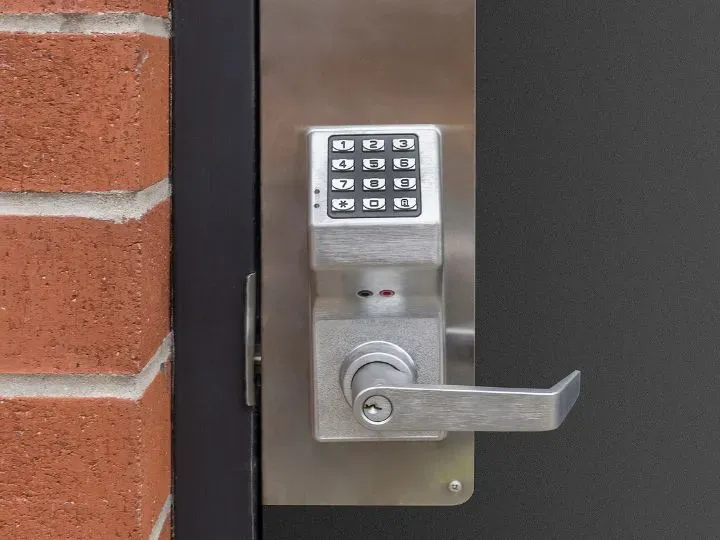
Keypad locks are a type of electronic lock that rely on numeric codes instead of keys or cards. To unlock, you simply punch in your PIN on the keypad.
Key features include:
- Simple code entry without keys or phones
- Ability to program multiple user codes
- Easy code changes for improved security
- Battery-powered operation with low-battery indicators
While keypad locks are technically a subset of electronic locks, they’re often grouped separately because of their straightforward design and popularity in both residential and small business settings.
Advantages of Keypad Locks
- Simplicity: Keypad locks don’t require phones, apps, or cards. Anyone with the code can enter quickly, making them ideal for families with children or workplaces with multiple employees.
- No Need for Keys: Lost keys are a common security risk. With a keypad lock, there are no physical keys to misplace or duplicate.
- Budget-Friendly: Compared to high-end electronic smart locks, keypad locks are often more affordable while still offering strong security features.
- Easy to Reprogram: If you suspect someone knows your code, simply change it in minutes. No need to rekey or replace the entire lock.
Comparing Security Levels
Electronic Locks:
- Can include two-factor authentication (code + smartphone).
- Some models feature biometric verification for added protection.
- Encryption technology helps prevent hacking attempts in higher-end models.
- Offer remote monitoring so you can see entry logs and activity history.
- Many include auto-lock functions, reducing the risk of leaving doors unlocked.
Keypad Locks:
- Security depends largely on code strength and user behavior.
- Frequent code changes and strong PINs (not “1234” or birthdays) help maintain safety.
- Mechanical key overrides ensure entry even if batteries die.
- Simple design means fewer tech malfunctions compared to app-based systems.
- Codes can be shared securely with family or employees without needing physical keys.
Both systems are secure, but electronic locks typically offer more advanced safeguards for high-security applications.
Cost Considerations
While the initial cost of electronic locks is higher, the added convenience and advanced features may justify the investment for tech-savvy users or businesses.
- Electronic Locks: Prices range from $200–$500+, depending on features like Wi-Fi integration, biometrics, and remote access. Installation can add extra cost.
- Keypad Locks: Usually fall between $75–$200, making them a cost-effective option for households or small offices.
Best Applications for Each
Electronic Door Locks Are Best For:
- Businesses needing advanced access control
- Property managers offering temporary access to tenants or contractors
- Homeowners who already use smart home systems
- Anyone wanting remote control and monitoring
Keypad Locks Are Best For:
- Families who prefer simplicity and don’t want to rely on smartphones
- Small offices with a handful of employees
- Rental properties where codes can be reset for each new tenant
- Budget-conscious buyers looking for reliable security
How to Decide Which System Fits You
When choosing between an electronic lock and a keypad lock, think about these key factors:
- Remote access and smart integration: Electronic locks are ideal if you want to control and monitor doors from your phone or connect with a smart home system.
- Simplicity and cost: Keypad locks are straightforward, reliable, and generally more budget-friendly.
- Managing multiple users: Electronic locks offer advanced features like custom permissions and access logs, making them better for businesses or rental properties.
- Convenience: If you simply want to eliminate the hassle of keys, a keypad lock provides an easy solution.
Your budget, lifestyle, and level of security needed will ultimately determine the right choice.
Why Professional Installation Matters
Both electronic and keypad locks are available in DIY versions, but professional installation ensures:
- Proper alignment for smooth operation
- Secure wiring or battery placement
- Integration with existing security systems
- Reduced risk of malfunctions down the line
A certified Rockland locksmith like Driscoll’s Lock and Key can also guide you toward the right brand and model for your specific needs.
Conclusion
When comparing electronic door locks and keypad locks, there’s no one-size-fits-all answer.
- Choose an electronic lock if you want remote access, smart home integration, or advanced security features.
- Choose a keypad lock if you prefer simplicity, lower costs, and easy code management.
Both systems provide stronger protection than traditional keys alone, and both can be excellent choices depending on your situation.
At the end of the day, the best lock is the one that fits your lifestyle, security needs, and budget.
How Driscoll’s Lock & Key Can Help
With over 50 years of experience, Driscoll’s Lock & Key has helped homeowners, businesses, and property managers across Rockland County and beyond find the right access control solutions.
Whether you’re interested in upgrading to a smart electronic lock or installing a simple keypad system, our licensed and insured locksmiths can guide you through product selection to installation and ongoing support.
Call us today at (845) 634-2400 or contact us online to schedule your consultation.
Frequently Asked Questions
Are electronic door locks more secure than keypad locks?
Not necessarily. Electronic door locks may offer features such as remote monitoring, access logs, and biometric authentication, while keypad locks provide code-based entry. Security depends on the specific model, its features, and how it is installed and maintained.
Can keypad locks work without Wi-Fi?
Yes. Many keypad locks operate independently of Wi-Fi and allow users to enter a code directly on the lock. However, remote access and other connected features may require an internet connection.
What happens if an electronic door lock loses power?
Many battery-powered locks provide low-battery warnings and backup entry options. Depending on the model, these may include a physical key or an external emergency power connection. Check the manufacturer’s instructions before choosing a lock.
Are electronic door locks worth the cost for businesses?
They can be useful for businesses that need to manage employee access, restrict entry to certain areas, or review access records. Smaller businesses with simpler security requirements may find keypad locks more practical and affordable.
Can a locksmith install electronic and keypad door locks?
Yes. A professional locksmith can help you choose a suitable lock, check compatibility with your existing door, and ensure proper installation. Driscoll’s Lock & Key can help Rockland County homeowners and businesses explore access control solutions that fit their security needs.