In homes with young children, valuable collections, or sensitive materials, cabinet locks serve as essential security devices. Beyond childproofing, these specialized locks protect valuables, medications, cleaning supplies, and other items that should remain secure. With numerous types available on the market today, selecting the right cabinet lock depends on your specific needs, aesthetic preferences, and installation capabilities.
Magnetic Cabinet Locks
Magnetic cabinet locks have revolutionized childproofing with their discreet, hidden installation. These innovative systems consist of two components: a lock mechanism attached inside the cabinet and a magnetic key that activates the lock.
Key benefits:
- Invisible from the exterior – maintains the cabinet’s appearance
- No drilling required for many models, making them renter-friendly
- Strong security that young children cannot easily defeat
- Simple adult operation with the magnetic key
Limitations:
- Requires keeping track of the magnetic key
- May not be suitable for extremely persistent children who might discover how to use household magnets as substitutes
- Installation alignment must be precise for proper function
Adhesive Cabinet Locks
For those seeking a temporary or no-damage solution, adhesive cabinet locks offer an appealing option. These locks use strong adhesive pads to secure to cabinet surfaces without permanent modification.
Key benefits:
- No tools required for installation
- No surface damage when properly removed
- Versatile application on various cabinet styles, refrigerators, and appliances
- Affordable and widely available
Limitations:
- Less durable than permanently installed options
- Adhesive may deteriorate over time, especially in humid environments
- May not provide sufficient strength for persistent attempts to open
Traditional Keyed Cabinet Locks
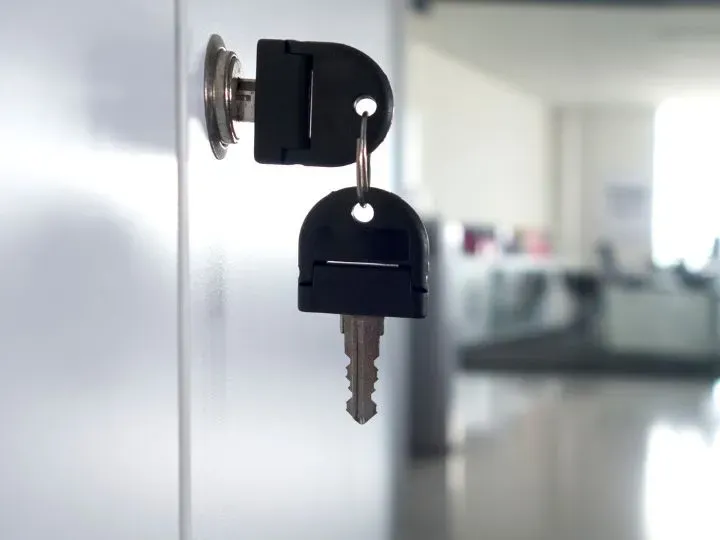
Classic keyed cabinet locks remain popular for their straightforward security and familiarity. These locks require a physical key and typically involve drilling for installation.
Key benefits:
- Time-tested security proven over decades of use
- Key security prevents unauthorized access
- Sturdy construction resists forcing open
- Professional appearance suitable for offices and formal settings
Limitations:
- Visible hardware changes cabinet appearance
- Key management can be inconvenient
- Permanent installation requires drilling
- Limited childproofing effectiveness if keys are accessible
Electronic Keypad Cabinet Locks
For high-security applications or shared access environments, electronic keypad locks offer advanced features with programmable codes.
Key benefits:
- Multiple access codes for different users
- No keys to lose or manage
- Tamper alerts in some models
- Access logs in premium versions
Limitations:
- More expensive than mechanical options
- Requires battery replacement
- More complex installation
- May not be aesthetically suitable for traditional cabinetry
Spring-Loaded Cabinet Locks
Spring-loaded systems use tension mechanisms that require a specific motion or technique to open, making them effective child safety devices.
Key benefits:
- Simple mechanical operation without keys
- Reliable function without batteries or magnets
- Moderate cost compared to electronic options
- Easily disabled when no longer needed
Limitations:
- Visible on cabinet exteriors
- Some children may eventually figure out the opening mechanism
- Limited aesthetic options
Sliding Cabinet Locks
Sliding locks adjust to fit across cabinet knobs or handles, physically preventing them from opening without removing the lock.
Key benefits:
- No installation required – simply slides into place
- Adaptable to various cabinet styles and handle configurations
- Portable for travel or occasional use
- Cost-effective solution for temporary needs
Limitations:
- Limited to cabinets with appropriate handle styles
- May not fit all cabinet configurations
- Less secure than permanent installations
- Visible exterior presence
Choosing the Right Cabinet Lock
When selecting cabinet locks, consider these factors:
- Security level required – Are you protecting against children or securing valuables?
- Installation preferences – Temporary vs. permanent, willingness to drill
- Aesthetic considerations – Visible vs. hidden hardware
- Budget constraints – Basic childproofing vs. advanced security
- Cabinet material and style – Some locks work better with specific cabinet types
Installation Tips
Proper installation ensures optimal lock performance:
- Read manufacturer instructions thoroughly before beginning
- Use templates provided for precise placement
- Test alignment before permanent installation
- Consider professional installation for complex or high-value cabinetry
- Install locks at appropriate heights beyond children’s reach
Maintenance Considerations
To extend the life of your cabinet locks:
- Clean mechanisms regularly to prevent dust buildup
- Replace batteries in electronic models before they fail
- Check adhesive integrity on temporary locks periodically
- Lubricate moving parts in mechanical locks annually
- Keep spare keys or magnetic keys in secure locations
Professional Solutions
While many cabinet locks are designed for DIY installation, certain situations call for professional assistance:
- Antique or valuable cabinetry requiring specialized handling
- Complex cabinet configurations not suited to standard locks
- Office or commercial applications with specific security protocols
- Multi-unit installations requiring master key systems
For residents in Rockland, NY and Orange County seeking expert advice on cabinet security, Driscoll’s Lock & Key offers professional consultation and installation services. Their experienced locksmiths can recommend appropriate solutions based on your specific cabinetry and security needs, ensuring proper installation that protects both your items and your cabinet integrity.
Conclusion
Cabinet locks provide essential security for a variety of needs, from basic childproofing to protecting valuable collections. By understanding the different types available—magnetic, adhesive, keyed, electronic, spring-loaded, and sliding—you can make an informed choice that balances security, aesthetics, and installation preferences.
Whether you choose a DIY solution or seek professional assistance from trusted local experts like Driscoll’s Lock & Key, the right cabinet locks offer peace of mind knowing that sensitive items remain secure while maintaining the functionality and appearance of your cabinetry.