
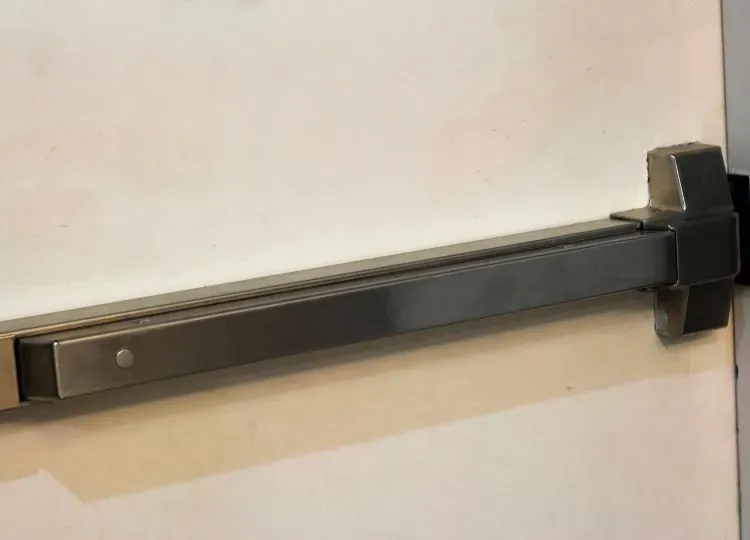
If you have ever looked closely at a commercial panic bar, you may have noticed a feature called dogging. While the name sounds unusual, it serves a simple purpose. Dogging allows a panic bar to hold the door’s latch in a retracted position, making the door easier to open during periods when constant exit access is needed.
Understanding how dogging works can help business owners, property managers, and facility staff know when and why this feature is used. It can also make it easier to recognize when a panic bar needs adjustment or locksmith service.
What Is a Panic Bar?
A panic bar, also called an exit device, is a type of door hardware designed to make it easy for people to exit a building quickly. Instead of turning a knob or using a key, someone can simply push against the horizontal bar to release the door.
Panic bars are commonly found in commercial buildings, schools, retail stores, warehouses, offices, and other properties where many people may need to exit quickly.
These devices are particularly useful because they allow occupants to open an exit door from the inside with minimal effort. Like other commercial door hardware, panic bars need to be properly installed and maintained to work as intended.
What Does Dogging Do to a Panic Bar?
So, what does dogging on a panic bar actually mean?
When a panic bar is dogged, the mechanism holds the door’s latch in a retracted position. This means the latch does not engage with the strike, allowing the door to open without someone having to push the panic bar each time.
For example, imagine a retail business that keeps an exit door available for frequent customer or employee traffic during certain hours. Rather than requiring people to push the panic bar every time they enter or leave, the device can be dogged so the door operates more freely.
Dogging does not mean the panic bar has been removed or permanently disabled. It is a feature built into certain exit devices that allows the hardware to be placed in a different operating mode when appropriate.
What Are the Different Types of Panic Bar Dogging?
Not every panic bar uses the same type of dogging mechanism. Common options include:
- Manual dogging: A manual mechanism uses a tool, such as a hex key, to retract and hold the latch.
- Cylinder dogging: This type uses a keyed cylinder to engage or release the dogging mechanism. It can provide more controlled operation than a basic manual mechanism.
- Electric dogging: Electrically controlled dogging uses an electrical signal to control the exit device. It may be integrated with other building access systems and allows the hardware to be controlled without manually operating the device.
The right option depends on the specific panic bar, door, and needs of the property.
When Is Dogging Used?
Dogging is generally useful when a door needs to remain easy to pass through during normal operating hours.
For example, a business may use dogging on an exit device during busy periods when employees and customers are frequently moving through a particular doorway. Keeping the latch retracted can make the door function more like a standard passage door.
When the building closes or controlled access becomes necessary, the dogging feature can be released so the latch engages again.
However, not every exit door should simply be left dogged. The appropriate operation depends on the building, door, occupancy, fire protection system, and applicable life-safety requirements.
Is Dogging a Panic Bar Safe?
Dogging itself is not necessarily unsafe. The important question is whether it is appropriate for the specific door and situation.
Commercial exit hardware is designed with life safety in mind. Doors that are required to provide panic or emergency exit functionality need to remain capable of allowing occupants to exit quickly when necessary.
Because building and fire-code requirements can vary, property owners should avoid assuming that every panic bar can be dogged whenever they want. If you’re unsure how a particular exit device should operate, a qualified Orange County and Rockland locksmith can inspect the hardware and help determine whether it is functioning properly.
Signs Your Panic Bar Needs Locksmith Service
A panic bar may need professional attention if:
- The latch does not retract properly.
- The dogging mechanism will not engage or release.
- The door does not latch correctly.
- The panic bar feels loose or unusually difficult to push.
- The door is difficult to open from the inside.
- The hardware appears damaged or worn.
Ignoring these problems can make an emergency exit harder to use and may also lead to more extensive hardware problems.
Conclusion
A properly functioning panic bar is an important part of commercial door safety. If your panic bar is difficult to operate, won’t latch correctly, or has a dogging mechanism that isn’t working as it should, professional service can help identify the problem.
Need help with a commercial panic bar or exit device? Call Driscoll’s Lock & Key to schedule professional locksmith service and keep your business’s door hardware operating properly.
Frequently Asked Questions
What does dogging a panic bar mean?
Dogging a panic bar means holding its latch in the retracted position. This allows the door to open without activating the panic bar.
Can you dog any panic bar?
No. Dogging capabilities depend on the specific exit device and its hardware. Some panic bars are designed with dogging mechanisms, while others are not.
How do you release a dogged panic bar?
The method depends on the type of dogging mechanism. Manual, cylinder, and electric dogging systems can each operate differently.
Does dogging a panic bar make it unsafe?
Not necessarily. However, whether a panic bar should be dogged depends on the door’s purpose and applicable safety and building requirements.
Enter your text here…