When it comes to commercial building safety, push bars play a critical role in protecting occupants and meeting fire code requirements. Whether you manage a retail store, office building, school, or healthcare facility, choosing the right type of panic hardware is essential.
One of the most common questions property owners ask is: What’s the difference between Grade 1 and Grade 2 push bars? While both are designed to allow fast and safe exit during emergencies, they differ in durability, strength, and ideal use cases.
Understanding these differences can help you make the right investment for your building’s safety and long-term performance.
What Is a Push Bar?
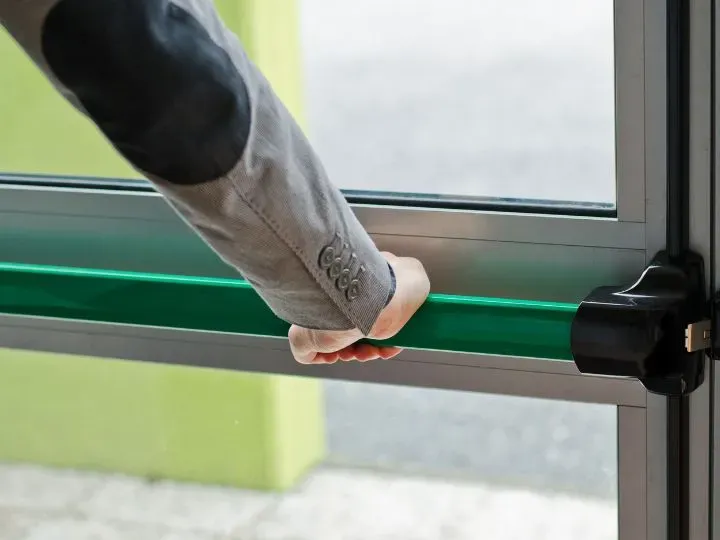
A push bar, also known as panic hardware or a crash bar, is a horizontal bar installed on the inside of a commercial exit door. When someone pushes the bar, the door unlatches instantly, allowing quick egress without needing to turn a handle or unlock the door.
Push bars are required in many commercial buildings to comply with fire and life safety codes. They are commonly installed in:
- Schools
- Hospitals
- Retail stores
- Office buildings
- Government facilities
- Multi-occupancy properties
In emergency situations such as fires or lockdowns, push bars allow occupants to exit quickly and safely. Because ADA-compliant door hardware is such a vital safety component, its performance and durability must meet strict industry standards.
Understanding ANSI/BHMA Grading Standards
Push bars are graded according to standards set by the American National Standards Institute (ANSI) and the Builders Hardware Manufacturers Association (BHMA).
These organizations test door hardware for:
- Durability
- Strength
- Resistance to forced entry
- Operational performance over time
One of the primary tests involves cycle testing, where hardware is opened and closed hundreds of thousands or even millions of times to simulate real-world use.
There are three grades for commercial door hardware, but Grade 1 and Grade 2 are the most commonly installed in commercial settings. Grade 1 is the highest rating, while Grade 2 is considered mid-level commercial grade.
What Is a Grade 1 Push Bar?
Grade 1 push bars are the highest-rated panic hardware available for commercial use. They are designed for heavy-duty applications and high-traffic environments.
To earn a Grade 1 rating, push bars are typically tested for up to 1 million cycles. That means they can withstand extensive daily use without compromising performance.
Best Applications for Grade 1 Push Bars
Grade 1 hardware is ideal for:
- Hospitals
- Airports
- Universities
- Large retail stores
- Government buildings
- High-occupancy facilities
These locations often experience constant foot traffic throughout the day. Doors may open and close hundreds or even thousands of times daily, making durability essential.
Benefits of Grade 1 Push Bars
- Maximum strength and durability
- Longer lifespan
- Better resistance to wear and tear
- Higher resistance to forced entry
- Ideal for public-facing buildings
While Grade 1 hardware typically costs more upfront, it often saves money long term due to fewer repairs and replacements.
What Is a Grade 2 Push Bar?
Grade 2 push bars are considered standard commercial-grade hardware. They are designed for moderate-duty applications and lower traffic environments.
These push bars are generally tested for around 500,000 cycles, half the testing requirement of Grade 1. While still durable and reliable, they are not intended for extremely high-traffic settings.
Best Applications for Grade 2 Push Bars
Grade 2 hardware works well for:
- Small offices
- Churches
- Small retail stores
- Low-occupancy buildings
- Private commercial properties
If your building does not experience constant public traffic, Grade 2 hardware may be a cost-effective and practical solution.
Benefits of Grade 2 Push Bars
- Lower upfront cost
- Reliable for moderate daily use
- Suitable for smaller commercial properties
- Meets safety code requirements when properly installed
For many businesses, Grade 2 provides the right balance between affordability and performance.
Key Differences Between Grade 1 and Grade 2 Push Bars
While both grades meet commercial safety standards, the differences come down to performance and intended use.
- Durability: Grade 1 push bars are built for heavier use and longer life. Grade 2 is designed for moderate use.
- Cycle Testing: Grade 1 hardware is tested up to 1 million cycles, while Grade 2 is tested around 500,000 cycles.
- Traffic Level: Grade 1 is best for high-traffic, public-facing buildings. Grade 2 works well in lower-traffic environments.
- Cost: Grade 1 typically costs more upfront. Grade 2 is more budget-friendly.
- Long-Term Value: In high-use buildings, Grade 1 often delivers better long-term value due to reduced maintenance and replacement needs.
Choosing the wrong grade can lead to premature wear, compliance concerns, and higher repair costs over time.
Which Grade Is Right for Your Building?
Selecting the right push bar depends on several factors:
- How much daily foot traffic does your building experience?
- Is the property open to the public?
- Are there specific local fire code requirements?
- Do you want a longer-lasting solution with fewer service calls?
For high-traffic commercial spaces, Grade 1 is typically the safer and more durable choice. For smaller or private properties with moderate usage, Grade 2 may be sufficient.
A professional locksmith can evaluate your doors, occupancy level, and local building codes to ensure you choose the right hardware.
Professional Installation Matters
Even the highest-rated push bar will not perform properly if it’s installed incorrectly. Improper alignment, incorrect mounting, or incompatible door materials can lead to malfunction or code violations.
Professional installation ensures:
- Proper door fit and alignment
- Code-compliant hardware selection
- Smooth and reliable operation
- Long-term performance
Working with an experienced commercial locksmith helps protect your investment and ensures your building remains safe and compliant.
Conclusion
The main difference between Grade 1 and Grade 2 push bars comes down to durability and intended use. Grade 1 is built for heavy-duty, high-traffic environments and offers maximum longevity. Grade 2 is ideal for moderate-use buildings and provides a more budget-friendly option.
When it comes to life safety hardware, cutting corners is never worth the risk. Choosing the correct grade ensures compliance, protects occupants, and reduces long-term maintenance costs.
If you’re unsure which push bar is right for your property, the team at Driscoll’s Lock & Key is here to help. Contact us today for expert guidance, professional installation, and dependable commercial locksmith services you can trust.