Documents are the backbone of daily workplace operations. From employee files and client contracts to sensitive financial records, much of this information still exists on paper and it often ends up in filing cabinets. While it may seem old-fashioned compared to digital storage, physical records are no less valuable, and in many industries, they’re legally required.
The problem? Filing cabinets are sometimes overlooked when it comes to security. An unlocked drawer, a weak factory-installed lock, or a misplaced key could leave sensitive information exposed. To keep your workplace compliant, efficient, and trustworthy, it’s essential to give filing cabinet security the same attention you’d give to digital data protection.
This blog will break down why filing cabinet security matters, the risks of neglecting it, and the best practices to keep your workplace documents safe.
Why Filing Cabinet Security Still Matters
Even in an age of cloud storage and encrypted digital databases, paper records remain unavoidable in many industries. Reasons include:
- Compliance requirements: Some sectors, like healthcare or legal services, must maintain hard copies of records for a specific number of years.
- Client preferences: Certain clients still prefer contracts, invoices, and forms in paper form.
- Backup storage: Physical documents serve as a secondary source of information in case of digital system failures.
- Daily convenience: Quick access to printed records is sometimes more efficient than retrieving digital files.
For these reasons, filing cabinets continue to house sensitive data. But without strong locks and consistent security policies, those cabinets can become an easy target.
Risks of Poor Filing Cabinet Security
Leaving filing cabinets unsecured, or relying on outdated, easily bypassed locks, opens the door to several risks:
- Data Breaches: Confidential information such as employee Social Security numbers, client addresses, or financial data could be exposed.
- Theft of Intellectual Property: Proprietary research, trade secrets, and product plans stored in physical form are highly valuable to competitors.
- Legal Consequences: Businesses are often legally responsible for safeguarding personal and financial data. Negligence could result in lawsuits or fines.
- Loss of Trust: Clients and employees expect their information to remain private. A security breach could damage reputation and erode trust.
- Internal Risks: Unauthorized access doesn’t always come from outside. Employees may access restricted files if cabinets aren’t locked or monitored.
By identifying these risks, businesses can take proactive steps to strengthen their document security.
Types of Filing Cabinet Locks
Choosing the right lock is the foundation of filing cabinet security. Let’s look at common types and their strengths:
1. Cam Locks
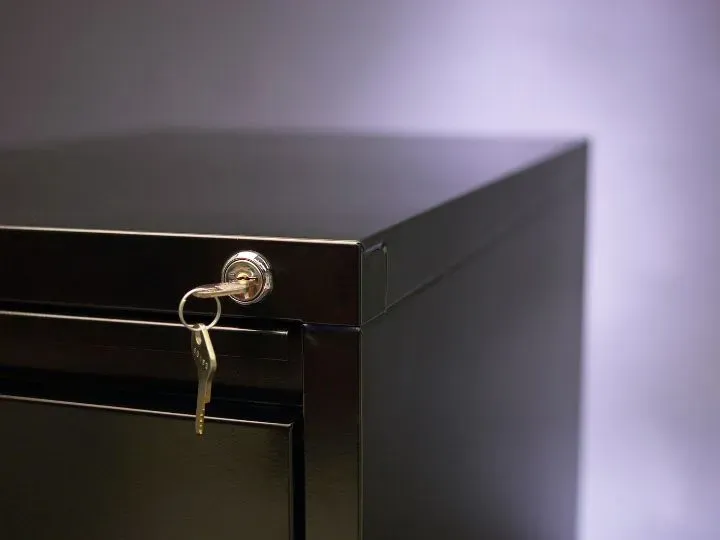
- The most common lock for filing cabinets.
- Uses a simple key mechanism with a cam that rotates to lock or unlock the cabinet.
- Affordable and easy to install.
- Best for low-risk environments but vulnerable to picking or key duplication.
2. Plunger Locks
- Operated by pushing the lock core to secure all drawers simultaneously.
- Provides convenience for multi-drawer cabinets.
- Offers moderate security, but replacement may require professional assistance.
3. Tubular Key Locks
- Round key design makes them harder to pick compared to standard cam locks.
- Provide a higher level of security while still being affordable.
4. Combination Locks
- Do not require a physical key.
- Users enter a numeric code to access files.
- Eliminates risks of lost keys but requires proper code management.
5. Electronic & RFID Locks
- Offer advanced features such as keycards, PINs, or even biometric access.
- Provide audit trails of access, helpful in highly regulated industries.
- Higher upfront cost but excellent for sensitive environments like law firms, government offices, or healthcare facilities.
Best Practices for Filing Cabinet Security
Locks are essential, but true document protection involves more than hardware. Here are best practices every workplace should consider:
1. Conduct a Security Audit
Evaluate which cabinets hold sensitive data and assess the adequacy of their locks. Not every cabinet requires the same level of protection.
2. Use Restricted Key Systems
If cabinets use keys, choose a restricted key system where duplicates cannot be made without authorization. This prevents employees from creating extra keys unnoticed.
3. Limit Access
Adopt a “need-to-know” approach. Only authorized employees should have access to cabinets with confidential files.
4. Secure Spare Keys
Store backup keys in a separate locked safe or vault, never in an unlocked desk drawer.
5. Upgrade Outdated Locks
If your cabinets rely on basic cam locks from decades ago, consider upgrading to tubular, electronic, or RFID options.
6. Implement Policies and Training
Employees should understand the importance of securing cabinets after use and reporting lost keys or compromised codes immediately.
7. Layer Security
Filing cabinet locks are more effective when combined with:
- Locked office doors
- Alarm systems
- Surveillance cameras
- Visitor management policies
8. Plan for Emergencies
Establish clear procedures for what happens if keys are lost, codes are forgotten, or cabinets are tampered with. A trusted locksmith in Rockland can provide emergency services when needed.
Filing Cabinets and Compliance Requirements
For many businesses, filing cabinet security is not optional. Regulations may require specific safeguards:
- HIPAA (Health Insurance Portability and Accountability Act): Requires healthcare providers to protect patient records, including physical files.
- PCI DSS (Payment Card Industry Data Security Standard): Businesses handling payment card data must secure all sensitive records.
- Employment Laws: Employee files such as tax forms and performance records must be kept confidential.
- Local Data Privacy Laws: Regulations like the New York SHIELD Act or California’s CCPA may hold businesses accountable for protecting paper records.
Failing to secure physical documents could mean non-compliance, with significant financial and reputational penalties.
Working With a Professional Locksmith
While many filing cabinets come with factory-installed locks, these are often basic and insufficient for sensitive documents. A professional locksmith can:
- Assess your workplace’s filing cabinet security needs.
- Install high-security or electronic locks.
- Create a master key system for controlled access.
- Provide rekeying or key duplication under secure protocols.
- Respond to emergencies like broken locks or lost keys.
By consulting with an experienced locksmith from Driscoll’s Lock and Key, businesses can ensure their filing cabinets are not the weak link in their overall security strategy.
Conclusion
Protecting sensitive documents is not just about compliance — it’s about safeguarding your business, your employees, and your clients. Filing cabinets remain a critical part of workplace document management, and securing them should be a priority.
By upgrading locks, restricting access, training employees, and partnering with a trusted locksmith, organizations can significantly reduce the risk of breaches, theft, or costly mistakes.
Need to secure your filing cabinets? Reach out to us today to discuss the best options for your workplace.