Security has evolved far beyond traditional lock-and-key systems. Today, electronic locks and access management solutions offer homeowners and businesses greater control, convenience, and peace of mind. Whether you’re protecting your home, managing an office, or securing a commercial property, electronic locks make it easier to control who has access and when.
From smartphone-controlled smart locks to biometric systems, modern access solutions provide flexible security options that can be customized to fit your needs. Understanding how these systems work can help you choose the right solution for your property.
What Are Electronic Locks?
Electronic locks are locking systems that use electronic authentication instead of a traditional key. Rather than relying solely on a mechanical key, these locks allow authorized users to unlock doors using digital credentials.
Common authentication methods include:
- Personal identification numbers (PINs)
- Key cards or RFID cards
- Smartphone apps
- Fingerprint recognition
- Key fobs
- Bluetooth or Wi-Fi connectivity
Modern electronic locks are commonly installed in homes, apartment buildings, offices, schools, healthcare facilities, hotels, and other properties where secure and convenient access is important.
Common Types of Electronic Locks
Not all electronic locks function the same way. Choosing the right one depends on your property’s security needs and how you want to manage access.
Keypad Locks
Keypad locks require users to enter a PIN code to unlock the door. They’re one of the most popular options for residential properties because they eliminate the need for physical keys.
Many models allow homeowners to create multiple user codes, making it easy to provide access to family members, guests, or service professionals.
Smart Locks
Smart locks connect to your smartphone through Wi-Fi or Bluetooth, allowing you to lock or unlock doors remotely. Many systems also integrate with smart home platforms, enabling voice control and automation.
Features often include:
- Remote locking and unlocking
- Real-time notifications
- Temporary digital keys
- Activity tracking
- Automatic locking schedules
These locks are ideal for homeowners who want greater convenience and remote access.
RFID and Key Card Locks
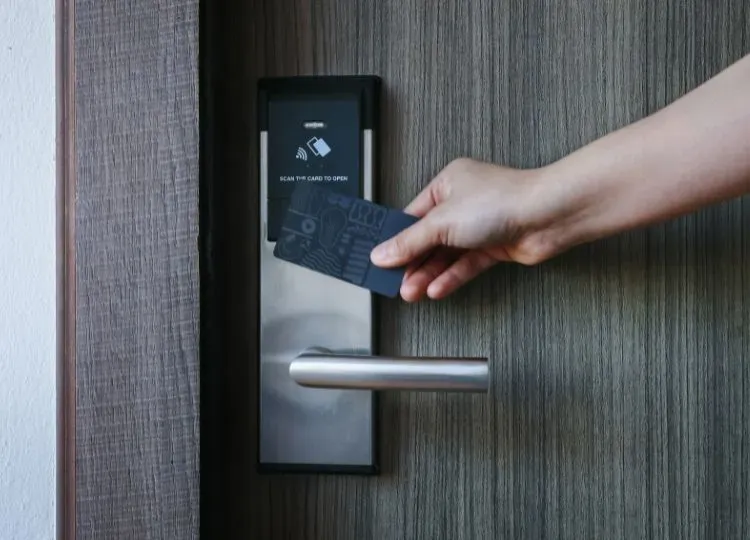
RFID (Radio Frequency Identification) locks use key cards, access badges, or key fobs to unlock doors. These systems are commonly found in office buildings, hotels, apartment complexes, and commercial facilities.
Since credentials can be quickly activated or deactivated, managing employee or guest access becomes much simpler than replacing physical keys.
Biometric Locks
Biometric locks identify authorized users through unique physical characteristics, such as fingerprints or facial recognition.
Because biometric data is difficult to duplicate, these locks provide an added level of security for locations that require tighter access control.
Understanding Access Management
Electronic locks become even more powerful when paired with an access management system.
Access management refers to the process of controlling who can enter specific areas, when they can enter, and what permissions they have. Instead of distributing physical keys, administrators assign digital credentials that can be updated at any time.
Modern access management systems often include features such as:
- Individual user accounts
- Scheduled access times
- Temporary guest credentials
- Activity logs
- Instant credential removal
- Remote management
These capabilities allow property owners and managers to maintain better security while simplifying day-to-day operations.
Benefits of Electronic Locks
Electronic locks provide several advantages over traditional locking systems.
Enhanced Security
Unlike mechanical keys that can be copied or lost, electronic credentials are much easier to manage. If a PIN, key card, or smartphone credential becomes compromised, it can usually be disabled immediately without replacing the entire lock.
Many electronic locks also use encrypted communication, making unauthorized access more difficult.
Greater Convenience
Carrying multiple keys is no longer necessary. Many systems allow users to unlock doors with a smartphone, fingerprint, or personalized code.
Property owners can also grant or remove access without meeting someone in person, saving valuable time.
Improved Monitoring
Many electronic lock systems record access history, allowing property owners to see who entered and when.
This visibility can improve accountability and help identify unusual activity.
Flexible Access Control
Electronic systems make it easy to assign different access levels to different users.
For example, businesses can provide employees access only during work hours, while homeowners can generate temporary codes for housekeepers, contractors, or vacation rental guests.
Scalable Security
Electronic access systems can grow alongside your property.
Whether you’re adding more doors, expanding your business, or managing multiple locations, many systems allow you to integrate additional locks without completely replacing your security infrastructure.
Best Practices for Managing Electronic Locks
To keep your electronic lock system performing reliably, follow these best practices:
- Install firmware and software updates when available.
- Replace batteries before they become fully depleted.
- Use strong, unique PIN codes.
- Enable multi-factor authentication if supported.
- Limit user permissions to only those who need access.
- Regularly review activity logs for suspicious behavior.
- Schedule routine inspections to ensure locks continue operating properly.
Routine maintenance helps maximize both security and system longevity.
When Should You Upgrade to an Electronic Lock System?
Electronic locks may be the right choice if:
- You frequently deal with lost or misplaced keys.
- You manage employees, tenants, or multiple users.
- You want to monitor property access.
- You need remote access management.
- You want to improve your property’s overall security.
- You’re looking for a more convenient, keyless entry solution.
A professional Rockland locksmith can evaluate your property and recommend an electronic lock system that fits your security goals and budget.
Secure Your Property With Professional Electronic Lock Solutions
Electronic locks and access management systems provide an effective way to improve security while making everyday access more convenient. With features like remote management, customizable permissions, activity tracking, and keyless entry, these systems offer greater flexibility than traditional locks.
Whether you’re upgrading your home’s security or implementing access control for your business, Driscoll’s Lock & Key can help you select, install, and maintain the right electronic lock solution.
Reach out to our experienced team today to learn how modern access management can help protect your property with confidence.
Frequently Asked Questions
Are electronic locks more secure than traditional locks?
Electronic locks can provide a higher level of security than traditional locks when properly installed and maintained. Many models feature encrypted communication, customizable access credentials, and activity logs, making it easier to manage and monitor who enters your property.
Can electronic locks work during a power outage?
Most residential electronic locks are battery-powered, so they continue to operate even if your home’s electricity goes out. Many also include backup options, such as a physical key override or emergency power connection, in case the batteries become depleted.
Can I control an electronic lock remotely?
Yes. Many smart electronic locks connect to Wi-Fi or Bluetooth, allowing you to lock or unlock doors, create temporary access codes, and receive notifications through a smartphone app from virtually anywhere.
Are electronic locks suitable for businesses?
Absolutely. Electronic locks are widely used in offices, retail stores, schools, and other commercial properties because they allow business owners to easily manage employee access, track entry activity, and revoke credentials without changing locks.
What happens if I forget my access code?
Most electronic lock systems offer multiple ways to regain access, such as using a backup key, mobile app, administrator code, or biometric authentication. The recovery method depends on the lock model and manufacturer.