
Keeping your property secure is about more than just locking a door. Security technology has evolved rapidly, offering business owners a range of options that balance convenience, control, and cost.
One of the biggest questions companies face is whether to stay with traditional keyed locks or upgrade to a keyless entry system.
Both have their advantages and which one is right for you depends on your business’s size, security needs, and day-to-day operations. Let’s break down the differences and help you decide what works best for your business.
Understanding Traditional Locks
Traditional locks have been the go-to choice for decades and for good reason. They’re simple, affordable, and reliable. A traditional lock uses a physical key to operate a mechanical mechanism inside the door.
Advantages of Traditional Locks
- Proven Reliability: Mechanical locks have been around for centuries. When properly maintained, they can last many years with minimal issues. They don’t rely on electricity or batteries, so they’ll still work during power outages.
- Lower Upfront Cost: For small businesses or those with limited budgets, traditional locks are a cost-effective option. Installation is straightforward, and replacement keys are inexpensive.
- Ease of Use: There’s no learning curve with a traditional lock. Employees and visitors understand how to use a key, which reduces confusion or operational hiccups.
Disadvantages of Traditional Locks
- Key Management Problems: Physical keys can be lost, copied, or stolen. When that happens, the only way to restore full security is to rekey or replace the locks.
- Limited Access Control: With a keyed system, you can’t easily control who has access at specific times. If an employee leaves the company and still has a key, your business may be at risk.
- Wear and Tear: Frequent use can wear down both keys and lock mechanisms. Over time, this may lead to jams or the need for rekeying services.
What Is a Keyless Entry System?
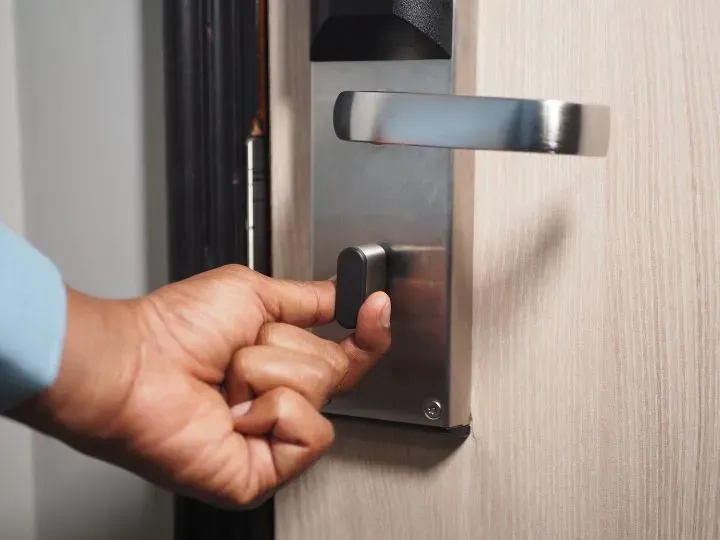
A keyless entry system eliminates the need for traditional keys altogether. Instead, it uses digital methods like keypads, card readers, mobile apps, or biometric scanners to unlock doors.
These systems are becoming increasingly popular among offices, retail stores, warehouses, and property management companies, especially those with multiple employees or locations.
Advantages of Keyless Entry
- Enhanced Security Control: With a keyless system, you can assign unique access codes, cards, or digital credentials to each employee. If someone leaves, you can simply deactivate their access instead of changing locks.
- Access Tracking: Many electronic systems log entry times, letting you see who accessed which doors and when. This audit trail can be invaluable for accountability and loss prevention.
- Convenience and Flexibility: Employees don’t have to carry keys, they can enter using a PIN, smartphone app, or key fob. Some systems even allow remote access, so you can lock or unlock doors from anywhere.
- Integration with Other Security Systems: Modern keyless entry can connect with alarm systems, video surveillance, and smart monitoring platforms, giving you centralized control over your building’s security.
Disadvantages of Keyless Entry
- Higher Upfront Investment: Installing a keyless system involves more hardware and setup costs than a standard lock. However, many businesses find the long-term savings in reduced rekeying and lost key replacement offset the initial price.
- Power or Connectivity Issues: Electronic locks require power – either from a battery or electrical connection. If power fails or the system isn’t properly maintained, you could experience access delays.
- Learning Curve and Maintenance: Some employees may need training to use a digital system, and occasional software updates or technical support may be required.
Comparing Security Levels
When it comes to pure security, both systems can be effective. It just depends on how they’re managed.
- A traditional lock is secure as long as keys are controlled and the lock is properly maintained. However, once a key is lost or duplicated, your security is compromised.
- A keyless system provides more precise control. You can restrict access by person, time, or door, and you can revoke permissions instantly. For businesses with multiple employees or sensitive areas, that’s a major advantage.
For the highest level of protection, many businesses use a hybrid approach. This keeps traditional locks on low-traffic areas and installs keyless systems on main entries or high-security zones.
Cost Comparison: Short-Term vs. Long-Term
While keyless entry systems typically cost more upfront, they can save money over time by reducing the need for locksmith visits and lock replacements.
| Cost Factor | Traditional Locks | Keyless Entry |
| Initial Installation | Low | Moderate to High |
| Maintenance | Low to Moderate | Low (software updates) |
| Rekeying / Lost Keys | Frequent | Rare |
| Security Management | Manual | Digital / Automated |
If you have a small office with a few employees, traditional locks might still make financial sense. But if you’re managing a larger operation or frequently experience staff turnover, the efficiency and control of keyless entry could make it worth the investment.
Ideal Use Cases
Traditional Locks work best for:
- Small offices, shops, or studios
- Low-traffic or single-entry facilities
- Businesses with long-term staff and minimal turnover
Keyless Entry Systems are ideal for:
- Medium to large businesses
- Multi-location or multi-door access
- Companies that need flexible access schedules
- Facilities storing valuable inventory or sensitive information
The best lock system for your business depends on your budget, staff size, and security goals. Traditional locks offer dependable simplicity at a lower cost, while keyless entry delivers advanced security and convenience for a modern workplace.
If you’re unsure which direction to take, start by evaluating your property layout, number of access points, and who needs entry at what times.
Talk to the Experts at Driscoll’s Lock & Key
Whether you’re upgrading to keyless entry or simply improving your existing locks, Driscoll’s Lock & Key can help you find the right balance between security, convenience, and cost. Our team has been securing local businesses in Rockland, Westchester, and Bergen Counties for over 50 years.
Contact us today to discuss your commercial security needs. We’ll help you explore your options and install a locking system that keeps your business safe and running smoothly.